Alcohol Awareness Month

By Stefania Buta, Data Coordinator

April is Alcohol Awareness Month. Research shows that individuals with disabilities are at a higher risk of experiencing alcohol misuse and related consequences compared to those without disabilities. Several factors contribute to this increased risk. Social isolation, stigma, co-occurring mental health conditions, and the use of alcohol as a form of coping to stress all play a role. Additionally, many people face barriers to accessing prevention programs and support services that are fully inclusive and accessible.

Our local data reinforces these concerns. Findings from the CANDLE Community Survey revealed that while adults with disabilities may be less likely to drink overall, they often experience more negative consequences when they do. Many participants reported noticeable impacts on their mental health after consuming alcohol, highlighting the need for targeted support.

One of CANDLE’s current priorities is increasing the use of SBIRT (Screening, Brief Intervention, and Referral to Treatment) throughout the community. SBIRT is an evidence-based approach designed to identify and address risky substance use early. This model includes:

  • Screening to quickly assess substance use risk
  • Brief Intervention using motivational conversations to encourage healthier choices
  • Referral to Treatment for individuals who need more specialized care

SBIRT is effective because it reaches people in everyday settings, often before substance use becomes more severe. By promoting early detection and intervention, SBIRT helps reduce long-term health risks, prevent injuries, and lessen the burden on healthcare systems.

Through community-driven initiatives like CANDLE and evidence-based practices like SBIRT, we can work toward a future where everyone has access to the resources and support they need to live healthy, fulfilling lives.
Our Kidneys and Alcohol

By Stefania Buta, Data Coordinator

This month, in honor of National Kidney Awareness Month, our goal is to understand how alcohol interacts with our kidneys so we can make informed, intentional choices about our habits.

For many people, the conversation around drinking focuses on the liver. But your kidneys, responsible for filtering waste, balancing fluids, and regulating blood pressure, are also directly affected by alcohol.

One of the most noticeable effects is increased urination. Alcohol suppresses a hormone that helps your body retain water, which is why you make more trips to the bathroom while drinking and may wake up the next day feeling dehydrated. While occasional dehydration is usually manageable for healthy individuals, repeated heavy drinking can place ongoing stress on your body’s fluid balance.

Alcohol can also affect blood pressure, which matters because high blood pressure is a leading cause of kidney disease. Over time, elevated pressure can damage the kidneys’ delicate filtering units. For people who already have high blood pressure, diabetes, or early kidney concerns, drinking habits may have a greater impact than they realize.

Electrolyte balance is another factor. Your kidneys carefully regulate minerals like sodium and potassium, which are essential for muscle and heart function. Heavy drinking can temporarily disrupt that balance, sometimes leading to fatigue, headaches, or weakness.

It’s also important to consider medications. If you take blood pressure medications, diuretics, NSAIDs (like ibuprofen), or certain diabetes medications, alcohol can increase kidney strain or interfere with how those drugs work. In some cases, the combination can make dehydration worse or affect blood pressure control. That doesn’t automatically mean alcohol is off-limits, but it does make informed conversations with your healthcare provider especially important.

None of this means we’re saying you can’t enjoy alcohol. For many healthy adults, moderate drinking doesn’t cause kidney damage. The key is understanding how patterns influence your overall health. Paying attention to hydration, knowing your personal risk factors, and being intentional about quantity can go a long way.

Brighter Days Ahead

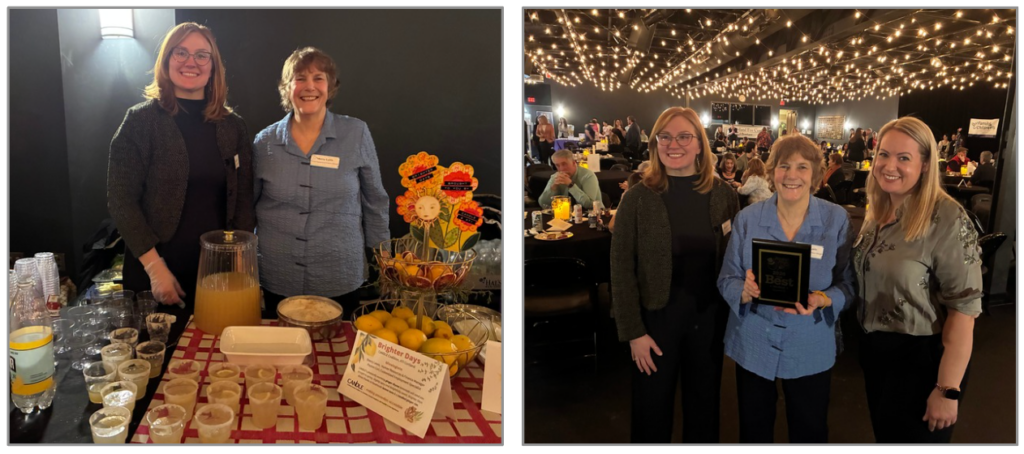
CANDLE recently participated in the Cortland Prevention Resources “Mocktail Magic” event, alongside other community members and groups, and we were honored to take home the win.

Our mocktail, Brighter Days ( a warming ginger-thyme lemonade with a candied ginger rim) was created with intention. It nods to mental health, hope, and the belief that brighter days are always ahead. Brighter Days reflects offering support without judgment and creating spaces that feel uplifting and welcoming. The drink became a simple but meaningful symbol of optimism and care for one another.

Description: Two images side by side. On the image on the left, Sherry Lewis and Payton Corl are smiling at their Mocktail Magic table with their sample cups filled with a yellow-lemon mixture on the table. Lemon and sunflower themed decor are also on the table.  On the image on the right, Sherry and Payton are pictured smiling and receiving the award for the best mocktail of the night with Cortland Prevention Resources Director, Melissa Simmons.  

Equally important, the event reflected why mocktails matter to us and the work we do. Mocktails play an important role in building healthier, more accessible communities. At social events, they help remove the pressure to drink alcohol in order to participate. Mocktails support intentional choices and this is especially important for people who choose to limit their alcohol consumption for health, recovery, cultural, religious, or personal reasons. When alcohol-free options are treated with the same creativity and care as traditional cocktails, it sends a clear message: everyone belongs here.
If you’re reading this and want to expand your understanding of mocktails—whether as a business, an event organizer, or in your own home—we invite you to reach out and see how you can get involved with the CANDLE Coalition.

Follow CANDLE and Access to Independence on social media for the recipe later this month!

Mocktail Magic: A Community Night of Connection and Zero-Proof Fun

by Melissa Simmons, Cortland Prevention Resources

Mocktail Magic returns this January, and we’re excited to share a preview with our partners at CANDLE. Each year, Cortland Prevention Resources brings neighbors and local organizations together for an evening centered on creativity, connection, and alcohol-free fun. Guests can expect imaginative zero-proof drinks, small plates, and a welcoming atmosphere with a touch of magic. The event is semi-formal, giving the night a fun, dressed-up feel.

We’re thrilled that CANDLE – Cannabis and Alcohol: Neighbors with Disability and Lived Experience – will again participate as both a sponsor and mocktail creator. As a program of Access To Independence, CANDLE’s mission to reduce alcohol and cannabis use within Cortland’s disability community is vital. Their focus on accessible, inclusive prevention aligns beautifully with the spirit of the event.

For us, CANDLE’s involvement shows how prevention can thrive in everyday community spaces. By crafting their own mocktail and sharing the evening with neighbors, they help highlight the importance of environments where people of all abilities feel welcome and able to participate fully – without alcohol at the center.

We’re also excited to welcome back Rocco Rich, the musical duo whose live performance was a favorite last year, helping create a warm, upbeat energy. Gorgers will provide this year’s food, adding familiar local flavor. And for an extra bit of fun, we’ll have a photo booth for guests to capture memories throughout the night.

While attendees will vote to select the best mocktail, the heart of the evening is simple: coming together, trying something new, and enjoying a substance-free space where everyone feels included.

We’re grateful for CANDLE’s partnership and for the meaningful way they bring the disability community into prevention efforts that are accessible, engaging, and joyful. We look forward to celebrating with you.

CANDLE Coalition 2025 Wrap-Up

by Erin Vallely, CANDLE Administrative Assistant

What a busy year it’s been for the CANDLE Coalition! As we reflect on 2025, we’re proud to share a summary of the coalition’s activities that have strengthened our mission to reduce substance use among people with disabilities in Cortland County. 

Most importantly, our Year 4 funding from OASAS has been approved so we can continue our work in 2026.  We were also awarded some Opioid Settlement funds from the county which will enable us to expand our work even more.  Without these grants, the coalition would not exist. 

We also worked hard to educate the community about our mission to reduce substance use within the Cortland disability community.  Early in 2025 we were featured in the Cortland Standard newspaper which helped raise awareness for our work. Our mass media campaign pilot testing was completed this year, setting the foundation for our 2026 social norms and social marketing campaigns. We spread our coalition’s message throughout the community with two full-page newspaper ads, four full bus ads, and monthly newsletter articles, blog posts, and social media content focused on Disability Visibility and Spoon Theory which help to shift perceptions of disability and reduce stigma. 

As always, data continued to drive our work. We completed our third community survey, adding valuable insights to our information surrounding disability and substance use. We also completed our second coalition capacity survey, updated our Capacity Plan, and our Capacity Evaluation.  To strengthen our data infrastructure, we hired a new Data Coordinator and will use some of the Opioid Settlement grant money to retain our existing data team at RHI.  With this move, we can continue to collect and analyze the information needed to guide our prevention strategies. 

Ultimately, CANDLE seeks to build community and help show people they are not alone.  We were grateful for the opportunity to support and participate in community events throughout the year, including Cortland’s first Mocktail Magic event, the Cortland County Mental Health WalkCortland Pride Fest, and the Cortland Counts Community Forum. We partnered with RHISUNY CortlandTC3CCHDCortland Prevention ResourcesThe LGBTQ CenterLime Hollow Nature CenterSPLAT! Sumthin’ Paint RoomArea 51New York Bagel, and Coffee Mania

Lastly, we shared our coalition’s efforts by presenting CANDLE’s work at the Strategic Prevention Framework Group Meeting, the NYS OASAS Town Hall, and the CNY Prevention Resource Center’s Virtual Prevention Showcase. We also guest lectured at two SUNY Cortland Health Economics classes on supporting special populations through data collection despite ongoing political challenges.  We taught students about the importance of lived experience and accessible public health initiatives.   

As we close out 2025, we’re energized by the progress we’ve made and the partnerships we’ve built. Thank you to our coalition members, community partners, and supporters who make this work possible. We’re looking forward to an even more impactful 2026!  To learn more or to get involved with the coalition, visit our website at candlecoalition.org.   

Planning Sober Holiday Gatherings

by Erin Vallely, CANDLE Administrative Assistant

Although the holidays are most closely associated with family and friend gatherings, it can also be a difficult time for people who have a history of substance misuse.  For people practicing sobriety from alcohol, cannabis, opioids, and other substances, the temptation to use these substances can be overwhelming, especially at gatherings where drugs or alcohol are present.  While internal discipline is important, external support is equally critical.  If you know someone in your life who is practicing sobriety, here are some tips on how to create sober holiday gatherings and activities: 

  • Talk About It: Talk to the person and find out what will make them most comfortable.  Some folks are comfortable with other people using substances around them as long as they are not pressured to participate.  Others will feel safest if the gathering is completely substance free.  Be sure to communicate your sober space expectations with everyone who will attend as well. 
  • Lock It Up: If you have alcohol, cannabis, opioids, or other dangerous substances in your home, get a locking cabinet or box to store them in.  Out of sight, out of mind can go a long way in helping people resistant temptation.  It also helps keep children safe from accidentally ingesting something they should not. 
  • Drink Alternatives: Replace traditional alcoholic beverages with a variety of non-alcoholic options.  As the sober movement has grown, many stores have nonalcoholic wines, beers, and mocktail mixes.  You can also set up a fancy soda and flavored water station to avoid anything reminiscent of alcohol. 
  • Check Recipes: Some traditional holiday recipes, from appetizers to desserts, include alcohol or cannabis.  Go through everything you plan to make and make any adjustments you need to in order to remove the substance from the recipe.  You may be able to simply leave it out, or you may need to find new recipes to try. 
  • Assess Public Activities: Consider your family and friends’ holiday traditions and determine if they are still inclusive to everyone.  For example, if you and your cousins usually do a holiday bar crawl, shift to doing a holiday coffee shop crawl.  Anything you do when consuming substances can be done soberly
  • Religious Observance Adaptations: If alcohol is usually involved in your religious celebrations, talk to your religious leader about the importance of considering non-alcoholic alternatives.  For example, wine can be replaced with grape juice.  Talk to your religious leaders about making changes and explaining the inclusivity that comes with permanently switching to sober alternatives.   

Making these simple changes can mean the difference between someone feeling safe and feeling unloved.  Hosting sober holidays is incredibly easy with a few simple adjustments.  By supporting people’s sobriety, you are showing them that their wellbeing is your top priority.  CANDLE is here to support you in making your holidays sober friendly.   

To learn more or to get involved with the coalition, visit our website at candlecoalition.org

Tips for Sober Halloween Fun

by Erin Vallely, CANDLE Administrative Assistant

Although Halloween is most often associated with candy, alcohol and recreational drug use also increases during this holiday.  According to the U.S. Department of Transportation’s National Highway Traffic Safety Administration, 159 people between 2017 and 2021 were killed in drunk driving accidents on Halloween night.  Additionally, college students report increased binge drinking and drug use on and around Halloween.  Temptations to use alcohol and recreational drugs can be overwhelming, especially at gatherings where drugs or alcohol are present.  If you are in recovery from substance misuse, Halloween can be a difficult time of year.  Here are some tips to help you have a fun, and sober, Halloween. 

  • Make a plan to attend substance use recovery support group meeting(s) 
  • Bring your own drink and treats to a gathering so you have safe options to enjoy 
  • Make plans with people who support your sobriety and will help you avoid the temptation 
  • Organize your own sober Halloween event with fun themed snacks and non-alcoholic drinks 
  • Volunteer at a Halloween event for kids such as a community Trunk-or-Treat, or school event 

Additionally, practice saying no to alcohol and recreational drugs.  If people are pressuring you to participate, it is good to remove yourself from the situation.  The people who truly care about your wellbeing will ensure you have fun without compromising your sobriety.  CANDLE is here to support you in your recovery and help you make a plan for a fun, sober, Halloween holiday season.   

To learn more or to get involved with the coalition, visit our website at candlecoalition.org.   

Impact of Substance Use on Likelihood of Falls in Older Adults

by Erin Vallely, CANDLE Administrative Assistant

September is National Fall Prevention month.  The awareness campaign focuses on education about ways to prevent people from falling down, particularly among older adults.  According to the Centers for Disease Control and Prevention (CDC), one in four older adults fall down each year, and are the leading cause of injury-related deaths in this age group. Even if a fall is not deadly, people can get seriously injured which ultimately leads to a loss of independence, decreased quality of life, and substantial emotional and financial burdens.  Here are some ways people can decrease their likelihood of falling

  • Removing tripping hazards like loose rugs, installing grab bars in bathrooms, improving lighting, and securing stair railings 
  • Engaging in regular physical activities that improve someone’s strength, balance, and flexibility to maintain muscle and coordination  
  • Getting regular vision and hearing exams helps ensure that people’s balance and coordination are being monitored and changes can be addressed right away  
  • Some medications can cause dizziness or impact balance so potential side effects should be closely monitored, and possible impacts mitigated as much as possible 

Substance use, especially alcohol, is another contributing factor to the likelihood someone will fall.  Drinking alcohol negatively impacts people’s balance, coordination, and judgment.  It also makes it more likely for individuals to trip or stumble and get injured.  According to data from CANDLE’s 2025 Annual Survey, 39.5% of older adults between the ages of 61-79 reported daily use of alcohol and 26.3% of people in this age range believed they should decrease the amount of alcohol they drink.  Older adults are less likely than younger adults to be screened for substance use and overuse often goes undetected.  This is why CANDLE is working with local service agencies to increase screening efforts and make prevention materials accessible to everyone of all ages.   

To learn more or to get involved with the coalition, visit our website at candlecoalition.org.   

Cortland Pride Festival 2025

by Erin Vallely, CANDLE Administrative Assistant

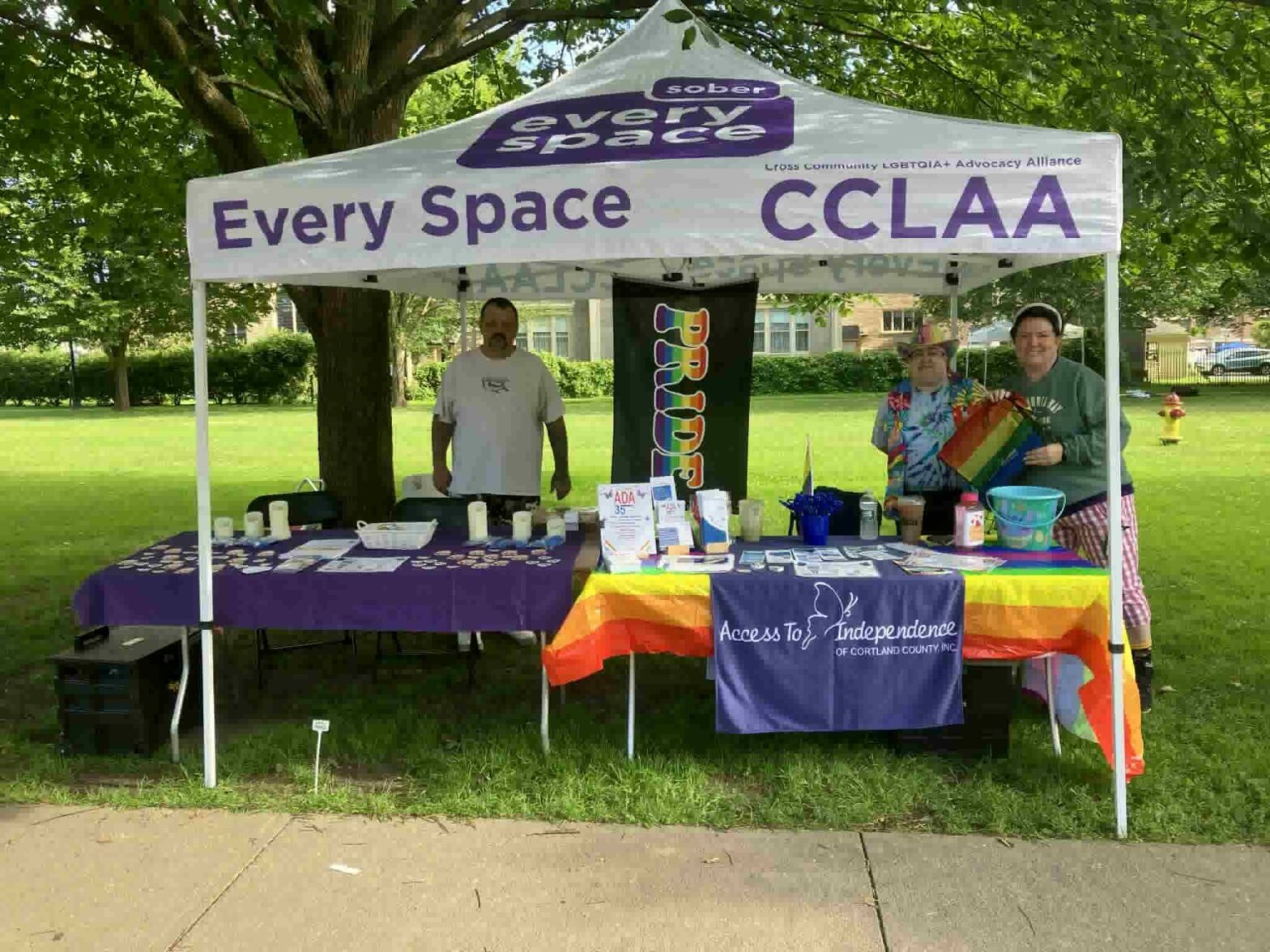
CANDLE was thrilled to join the Cortland LGBTQ Center at their annual Pride Festival on July 19th, 2025.  The event was held at Courthouse Park and featured an information and vendor show, as well as entertainment throughout the day.  The event, organized by Mike Doughty and Regina Cuddeback, is an opportunity to come together to support one another, celebrate resilience, and remind people queerness is a natural part of diversity.  Attendance was estimated at 400 people, which is the best it has been in the event’s three-year history. 

As a sponsor, CANDLE supported the event with a donation and tabled at the festival which took place from 10am-2pm.  Other sponsors of the event included Go Jo Productions, Cortland Repertory Theatre, Grace and Holy Spirit Church, Cortland Chiropractic, Guthrie, Excellus BCBS, Indivisible Cortland County, Family Planning of South Central NY, Area 51, Leonard’s Cleaning & Hobby Supplies, Tompkins Cortland Real Estate, Gay Life Journey, All My Friends Books, Seven Valleys Health Coalition, PFLAG Ithaca/Cortland, Cabinet Thirty-One, and several individuals.  In total about $6,000 was donated, which made the event possible.   

The family friendly drag show featured Noah Phence, Queen TessentialSaylix Morrison, and Scope Kaleido with tributes to PBS/NPR and banned books.  People sang and danced along throughout the show.  Attendees also learned about local services, shopped at vendor tables, and celebrated pride together.  Food and treats were also available throughout the park.  ATI and CANDLE staff and volunteers spoke with many individuals during the event, many of whom were excited to hear about CANDLE’s mission to reduce substance use within the disability community by making prevention services accessible.  Thank you to everyone who joined us that day! 

Cortland Pride Festival is a prime example of an accessible event that everyone can enjoy.  The set up was physically accessible with tables lined up along walkways, mobility equipment was available to borrow free of charge, there were places to stop and rest in the shade, and substances such as alcohol and cannabis were not allowed in the park.  Everyone was able to enjoy the day in a safe and comfortable environment.  If you want to learn more about hosting accessible and inclusive events, please visit ATI’s blog for actionable steps you can take to ensure everyone in the community can enjoy your event. 

To learn more or to get involved with the coalition, visit our website at candlecoalition.org.   

Celebrate Cortland Pride Fest with CANDLE

by Mike Doughty, CANDLE Coalition Member

This year will be the third annual Cortland Community Pride Festival! The festival will be on Saturday July 19th, from 10am to 2pm at Courthouse Park in Cortland. We will have over 60 agencies and vendors, games, a raffle giveaway, a pride costume contest, and our family friendly drag show! Like previous years, we will have our vendors and agencies spread throughout the park, ranging from local and regional healthcare providers, mental health providers, social support groups and coalitions, vendors selling their art and products, state offices/departments, as well as some options for food and drinks during the event. With over 60 tables registered for the event, there will be something for everyone.

We also have a group of sponsors that gave over $5500 to help fund the event this year! We greatly appreciate CANDLE’s support and are proud partners of the coalition. We are extremely thankful to all our sponsors and partners that are helping with the event. You can find the full list of sponsors on the flyer for the event and on the Center’s website.

As members of CANDLE, this event will be substance free and open to everyone of all ages. Not only is this a day of fun, but it is also an opportunity to meet new people and build community. Statistically, queer folks are more likely to misuse substances, such as alcohol and cannabis, compared to non-queer folks. Finding supportive people to surround yourself with helps decrease substance misuse. Here at the LGBTQ Center, we are always working to create a supportive and healthy community for all.

We hope for amazing weather and to bring together the community in a day of fun and Pride! We hope you’ll join us!

~Mike Doughty, Cortland LGBTQ Center Program Coordinator

Cortland County Mental Health Walk 2025 

By Erin Vallely, CANDLE Administrative Assistant 

CANDLE was thrilled to join the Cortland County Mental Health Community Resource Fair and Walk on May 15th, 2025.  The event was held at the Cortland County Fairgrounds and the walk went to Guthrie Cortland Medical Center and back.  The event, organized by Cortland County, is an opportunity to come together to support one another, celebrate resilience, and to raise awareness for mental wellness.   

As a sponsor, ATI supported the event with a donation and tabled at the community resource fair which took place from 11am-12pm.  Other sponsors of the event included Catholic Charities of Cortland County, City of Cortland Police Department, Cortland County Sheriff’s Office, Guthrie, Cortland County Legislature, Clint Bush, Family & Children’s Counseling Services, OCM BOCES, SPEAK UP Cortland, among others.  The crowd then heard from a variety of speakers including youth, community leaders, human services agencies, and law enforcement before heading out for the walk. Some discussed the importance of reducing the stigma around asking for and receiving mental health support. Others shared the need for expanded mental health services in Cortland County and the steps that have already been taken to reach that goal, including construction of a new mental health facility on Port Watson Street. 

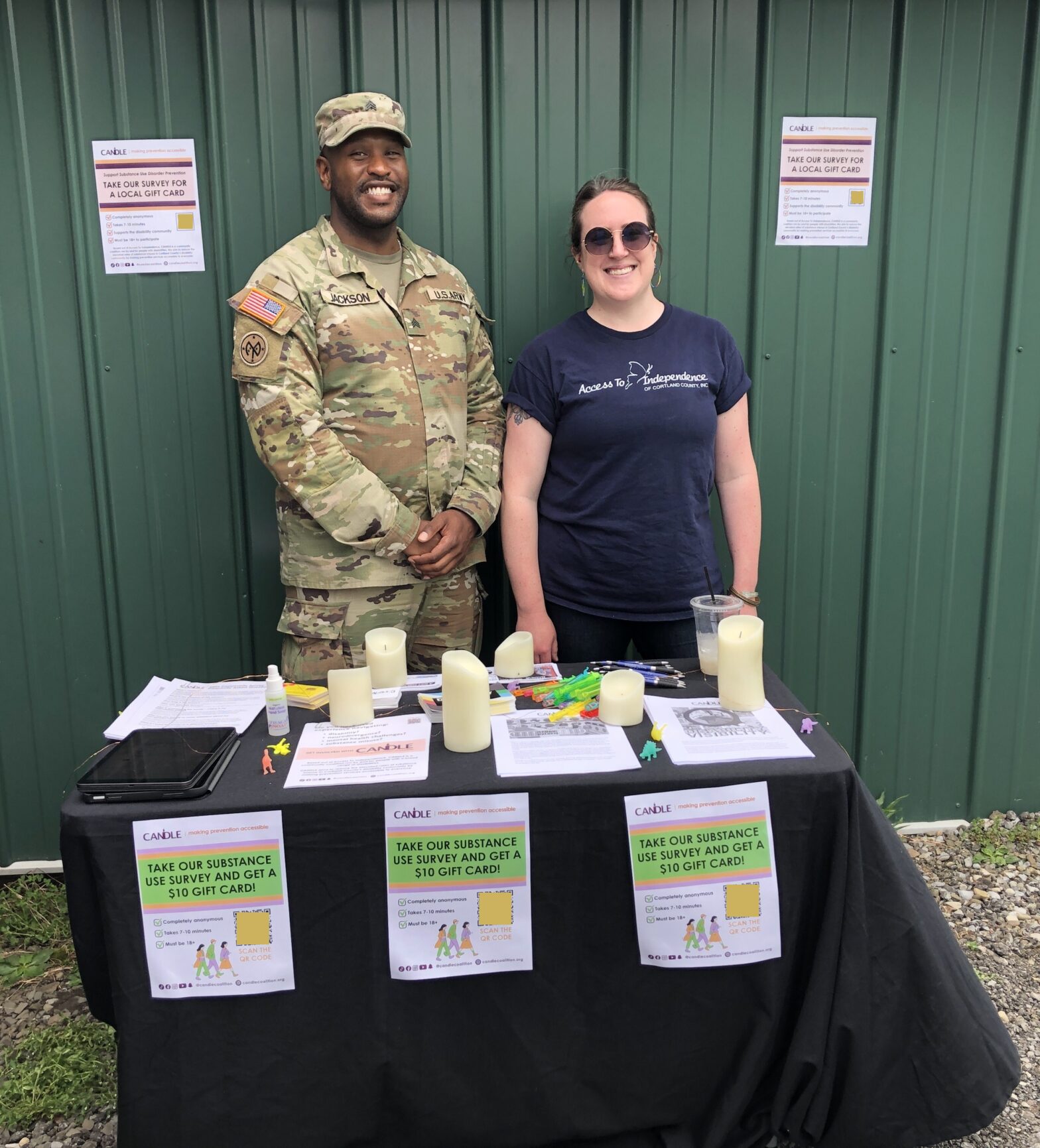
ATI and CANDLE staff and volunteers spoke with many disabled individuals during the event, many of whom were excited to hear about CANDLE’s mission to reduce substance use within the disability community by making prevention services accessible. Visitors without disabilities also expressed their support for our efforts. In addition to spreading CANDLE’s message, Ally McCabe and SGT Brian Jackson from the New York National Guard Counterdrug Taskforce continued our annual substance use community survey efforts.  By the end of the walk, we received 47 survey responses from local community members!  Thank you to everyone who supported us by taking it. 

If you would like to participate and haven’t already, please take the survey at the link below.  By anonymously sharing your experience, you help us determine which prevention strategies will be most appropriate and effective at reducing substance use rates here in Cortland County. Those strategies are then adapted by CANDLE to be universally accessible, ensuring that people with disabilities have the same access to prevention services as everyone else. 

Help ATI Make Prevention Accessible: STOP IN TO ATI TO TAKE THE SURVEY

To learn more or get involved with the coalition, visit our website at candlecoalition.org.   

Exploring Substance Misuse Programming on Global Accessibility Day

By Erin Vallely, CANDLE Administrative Assistant

Did you know May 15th, 2025, is Global Accessibility Awareness Day? While the day’s focus is usually on web accessibility, CANDLE wanted to use the opportunity to talk about accessibility in prevention programming. All too often, substance misuse prevention programming is not accessible to individuals with disabilities and chronic illnesses. Here’s some things to consider:

Location: The first step is to ensure your programming takes place in a universally accessible space. Some aspects of accessibility include access by public transportation, time of day, step free entrances, and rooms with clear walking paths. The space you use needs to be welcoming to everyone, regardless of their ability level.

Material Accessibility: The second step is to assess your materials for accessibility. Creating alternate versions of things ahead of time, such as large print or audio versions, will make it much easier to provide accommodations when needed. You also want to ensure all your materials and handouts use clear and easy to understand language.

Cultural Competence: The third step is to assess your level of knowledge about disability and chronic illness cultural competencies. If you have not been trained on how to work with disabled individuals, seeking training is a good idea. It is important to understand the variety of needs individuals might have before you are required to meet those needs in the moment.

Although this article is focused on prevention programming accessibility, the advice applies to all public events and outreach. People with few close relationships and those experiencing social isolation are at a higher risk for experiencing struggles with substance misuse. It’s important everyone prioritize community accessibility in all areas of life.